Collected knowledge of Má'di ...
The Má'di
A large portion of the Má'di people are displaced, living as refugees around the world, the Má'di homeland is inhabited by many different people who are also displaced. As most displaced people, wether madi or other, will never return to their homeland, it is important to let the Má'di spirit lift of from the land and settle in the hearts of the people and their desendants, where ever they are.


More: Wikipedia: Richard Buchta · Wikipedia: Madi people
Background
The madi name is said to originate from a man who had been on the run from Ethiopia and the Sudan during those dark ages of evolution, when different clusters of communities were moving from place to place in search of food, wealth and domination of other weak communities in order to increase their political might in case of external aggression. When this man ran and wandered until he could no longer bear, he later decided to station himself in a place now known as madi district. The meaning of the name is “Here I am come what may”.
The Social and Political system of the Madi
Include thus: established clans and kinship under traditional rulers which all the subjects in one geographical area pay their allegiance. There are clan and village leaders and family units who ensure that law and order within communities are kept and maintained socially, people do not worry within close relations, communal field work, feasts, hunting and funerals take place which brings about consolidation of unity, cooperation and peace. Marriages normally take place in churches, in homes of bridegrooms and in the government Administrators office. Traditional shrines are respected. Hereditary rulers and their spouses are buried in those sacred places (rudu)
Demography and Geography

The Mà'di people inhabit the south western part of Torit district in the Sudan where the Nile River makes a sharp bend into Uganda. In Uganda, they are found in west Nile districts of Moyo and Adjumani . The porous nature of the borders between Sudan and Uganda has enabled the Mà'di to move and settle freely on either sides of the border during the civil wars in the two countries. The attempted genocide on the Mà'di (in Uganda) during the 80's cost lives and property. As a result at a point the then Mà'di district was almost un-inhabited. The Mà'dis were scattered in all directions but most took refuge in Southern Sudan and other parts of the region. The other sizable settlement of Mà'dis referred to as “Mà'di quarters” in Gulu town was obviously demolished and the settlers murdered or dispersed. As a consequence of colonialism, many Mà'dis left the “home land” in pursuit of education and or employment in other parts of Uganda but mostly headed for Gulu in Acholi, Lira in Lango, Jinja in Busoga and Kampala in Buganda to mention just but a few destinations. Jinja particularly because of the many industries was a natural and suitable destination, so many Mà'dis settled with their families and in fact sadly most of them as of now seam to have lost the “umbilical cord” to the motherland for ever. Mà'di region (Adjumani and Moyo Districts) occupy an area of 5,600 sq km. The population is estimated to be 175,646.(as per National Population Census of 1991)
Environment, Economy and Natural Resources

Mà'di territory is hilly and traversed by rivers and streams. The Mà'di are a sedentary agrarian community. Their economy is based on subsistence agriculture, in which the main crops are sorghum, maize, cassava, groundnuts and tobacco. In the 1960s, the farming of cotton was introduced as a cash crop but this was disrupted by wars and economic disintegration of the mid 70s.Currently there is some engagement in the growth of cotton, simsim (sesame), sunflower, groundnuts and rice as cash crops. The Mà'di rear small herds of cattle, goats and sheep as well as fowl. Along the river Nile there has always been a thriving occupation of fishing. Beginning from Laropi all the way to Nimule on both sides of the river, families have been depending on fishing both for food and small scale subsistence trade.
Mythology and History
The mystery of birth tends to puzzle the Madi, whose beliefs are based on reproduction and hence, their origin as a people. Rubanga (often also spelled Rabanga) is the supreme being responsible for creation. In addition to being a spirit, Rubanga was also regarded as the earth in the sense of ‘Mother Earth’. This was grounded in the logic that everything is born from the earth.

Language

The Ma'di speak ma'di tongue. A Sudanic language related to the Moro, Lugbwara, Keliku and Avukaya, which points to their common origin. Thanks to Mairi John Blackings who wrote " A gramar of Ma'di " and " Maʼdi English-English Maʼdi Dictionary " the language is now saved from oblivion.
Society, Social Events, Attitudes, Custom
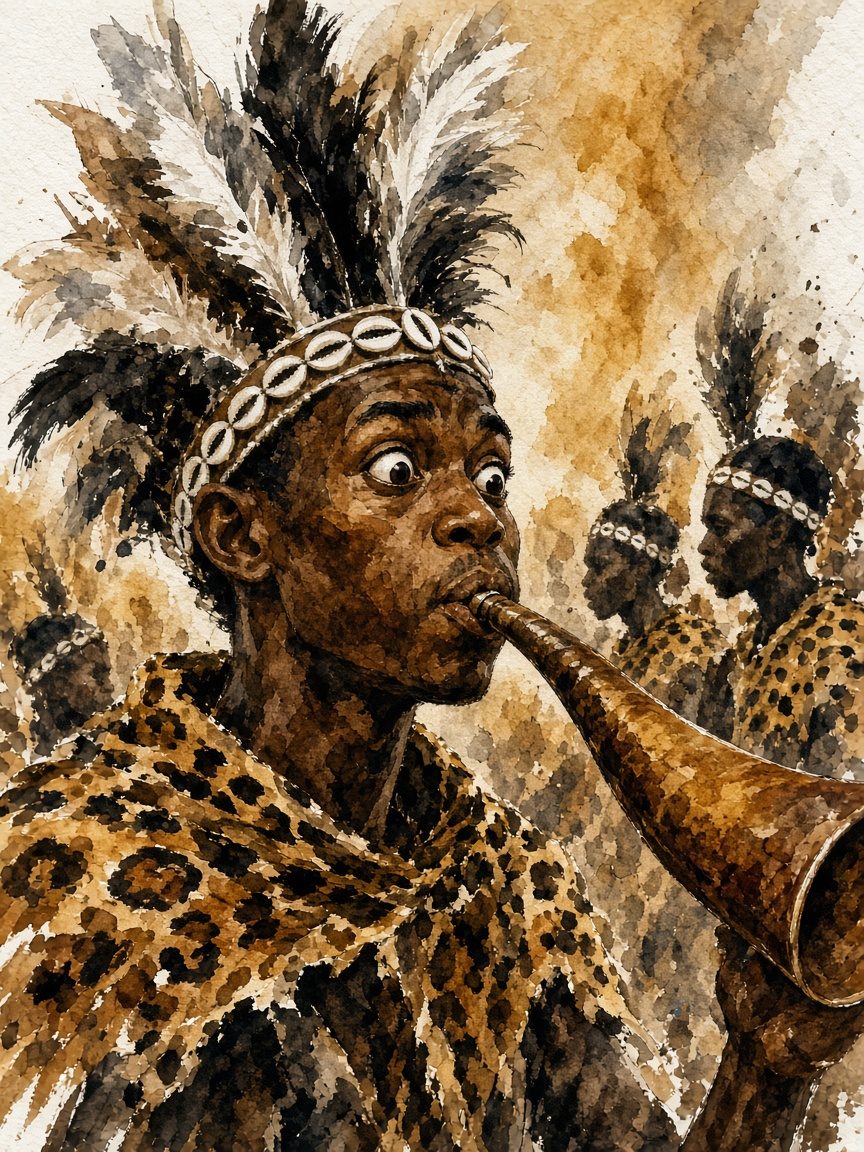

The social and political set-up of the Madi is closely interwoven with spirituality and this informs their attitudes and traditions. The society is organized in chiefdoms headed by a hereditary chief known as the Opi. The Opi exercised both political and religious powers. The rain-makers, land chiefs – vudipi (who exercises an important influence over the land) and the chiefs are believed to retain similar powers even after their deaths. There was a hierarchy of spirits corresponding exactly to the hierarchy of authority as it existed in the society. The Opi (Chief) is the highest Authority in Madi, he is followed in rank by the community of elders who are responsible for resolving disputes, in the clans/villages.
Birth
The birth of twins is considered an ill-omen among the Madi attributable to Rubanga. Twins were regarded as mysterious creatures and in fact the elder of the twins was named Ejaiya meaning 'take him to the bush' and the younger Rubanga. Assistance to extended families plays a major influence and role in maintaining ethnic or kinship ties. Harmony among the Madi people is kept because there exists big respect and peace amongst the people of madi and aliens. There is no social or political exclusion of all those who chose to settle in the district, trade is liberalized, when it comes to justice, no Kangaroo law is applied but only fair deal and trial is accorded to each side cases are not solved in the same way.
Rainmaking
There are more than 45 rainmaking centres in the Madi country. With only two exceptions, rain could be made by the rainmaker by using a special set of stones which, were usually white in colour. The Madi believe that ‘rain stones’ come with rain from the sky and they are categorised as ‘male’ and ‘female’ stones. The male stones are conical with fairly sharp points while the female ones would be either round or conical but perhaps without sharp points. The rainmaker could tell which is which without any difficulty. Once the rain stones were discovered, the fact was reported immediately to the chief. They are kept in special pots lest they jump about when it is raining or when lightening strikes.
Judicial System
The chiefs and clan elders exercise judicial powers of settling cases. However, in cases where the suspect pleaded innocence to accusations of stealing or adultery, the witch doctor was consulted. The witch doctor would take a handful of spear grass and order the accuser and the accused to hold each end of the grass. The witch doctor would then cut the spear grass with an arrow. Whoever was guilty would fall sick and the truth would establish itself through the consequences.
Spirituality and Beliefs
The whole life of the Madi is centred on the belief that their ancestors survived after death as spirits known as ori. It is believed that the ori could intervene directly in human affairs. The Madi attribute every misfortune to the anger of a spirit and in the event of a misfortune or sickness, they would immediately consult an odzo or odzogo (witchdoctor) to find out which ancestor was behind the ordeal.
Sacrifices were then offered to the particular spirit in order to avert its malign influence on the living. Madi are a fatalistic people who traditionally in the absence of an institutional police, use their good will and intent to conduct them selves as any malevolence and malice are punished by the gods and spirits. They also believe in good and bad luck( andra Loso and andra unzi )
Cource: http://www.gurtong.org